
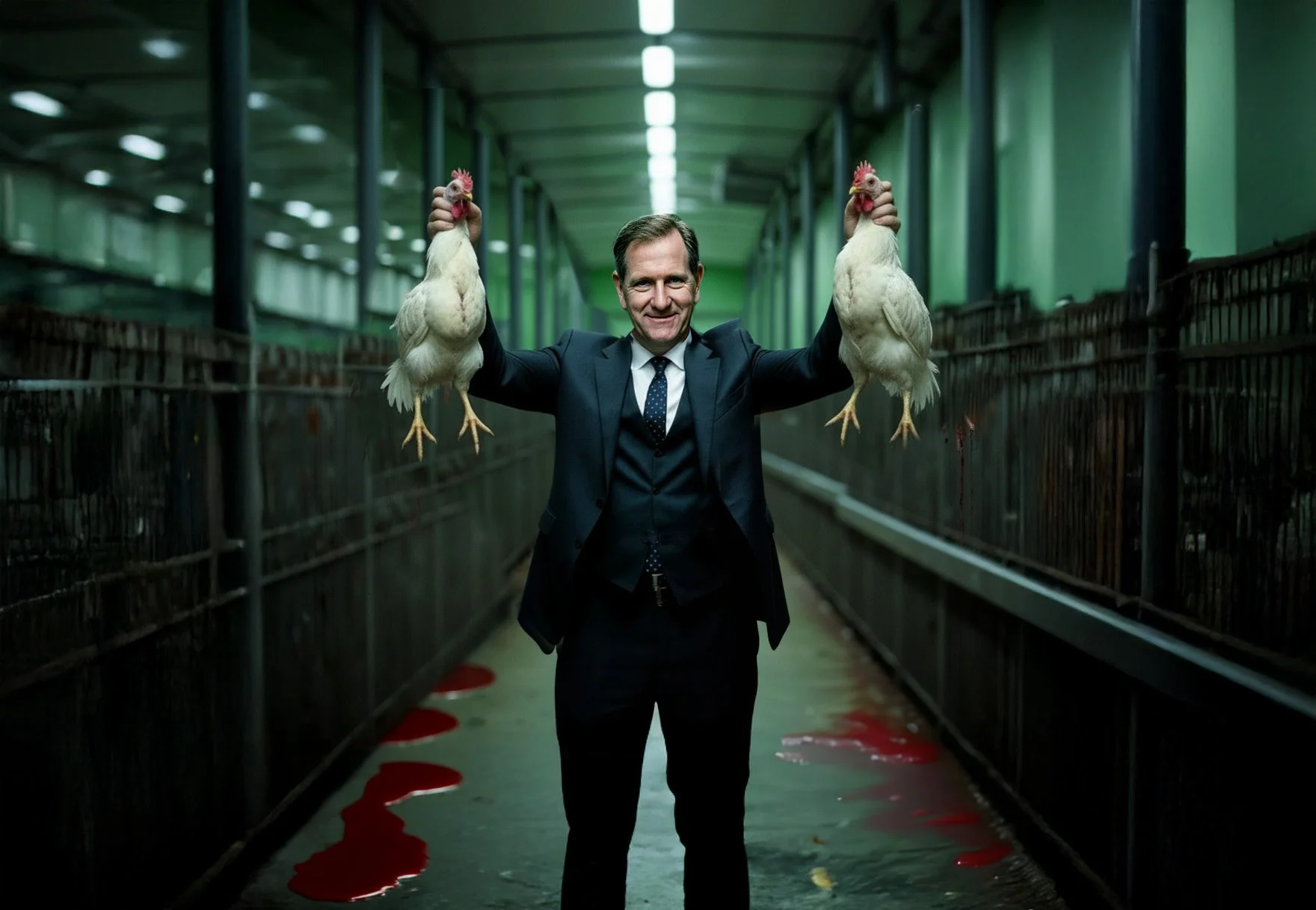
WHO IS Wiebe Draijer?
A hypocrite who boasts about ethics, sustainability,
and responsibility.
Meanwhile, the company he chairs profits from some of the worst animal cruelty in the global food system.
AI image intended for parody.
The made up
Moral Leader
Wiebe Draijer loves to talk about moral leadership. He even says his parents raised him to “leave a positive mark on the world.”
But as Chair of the Supervisory Board at Ahold Delhaize — the grocery empire behind Stop & Shop, Giant, Food Lion, and Hannaford — Wiebe is approving business decisions that rely on animal torture.
Battery cages so small hens can’t spread their wings.
Chickens forced to live in conditions that cause foot lesions, feather damage, and weak, brittle bones. All to maximize profit for shareholders.
Wiebe’s inaction will be a shameful stain on the world… Some legacy.

AI image intended for parody.

AI image intended for parody.
The Two Faces of Wiebe.
-
Chairs a company that buys eggs from caged hens.
-
Condones suppliers burning through thousands of tons of fossil fuel to run factory farms.
-
Signs off on supply chains that keep chickens trapped in tiny wire cages.
-
Could be breaking records by how much he is running away from responsibility.

Ahold Delhaize
The cage kings of Europe.
Ahold Delhaize promised to go cage-free. Years later, hens are still locked inside wire cages the size of an A4 sheet of paper.
These cages are so cruel they’re banned in the EU, New Zealand, Canada, and parts of the US — but Ahold continues to source from them for its own brands.
Consumers were told a lie. The reality is delays, denials, and deceptions.

Why is Wiebe Draijer
obsessed with
evil eggs?
AI image intended for parody.
THE SHOCKING TRUTH ABOUT BATTERY CAGE EGGS
-
Hens in cages suffer from limited space and restricted movement, which prevents them from engaging in natural behaviors and leads to high stress and frustration. Studies also indicate that caged hens have higher rates of Salmonella, a leading cause of foodborne illness and are more prone to disease than hens in systems that allow for greater mobility and expression of natural behaviors.
-
Each hen in a battery cage is given only 67-86 square inches of space—less than the size of a sheet of paper—leaving them unable to spread their wings or move naturally.
-
Hens are unable to perch, nest, dust-bathe, or forage, causing severe psychological distress and unnatural, repetitive stress behaviors.
-
Wire cage floors cause painful foot disorders, overgrown claws, and open lesions, while sloped designs lead to chronic discomfort and injuries.
-
Battery cages deny hens their natural behaviors, such as scratching, nesting, and foraging, leading to chronic stress, frustration, and harmful repetitive behaviors.
-
To maximize egg production, hens undergo forced molting by withholding food and water, causing severe stress, feather loss, and long-term health issues, including paralysis and death from dehydration.
-
Hens are subjected to constant artificial light to extend egg-laying periods, disrupting their natural cycles and contributing to bone fragility and overall poor health.
-
While the EU banned battery cages in 2012, Hannaford’s parent company, Ahold Delhaize, has pushed the cage-free egg deadline from 2025 to 2032, allowing millions of hens in the U.S. to continue suffering for years to come.
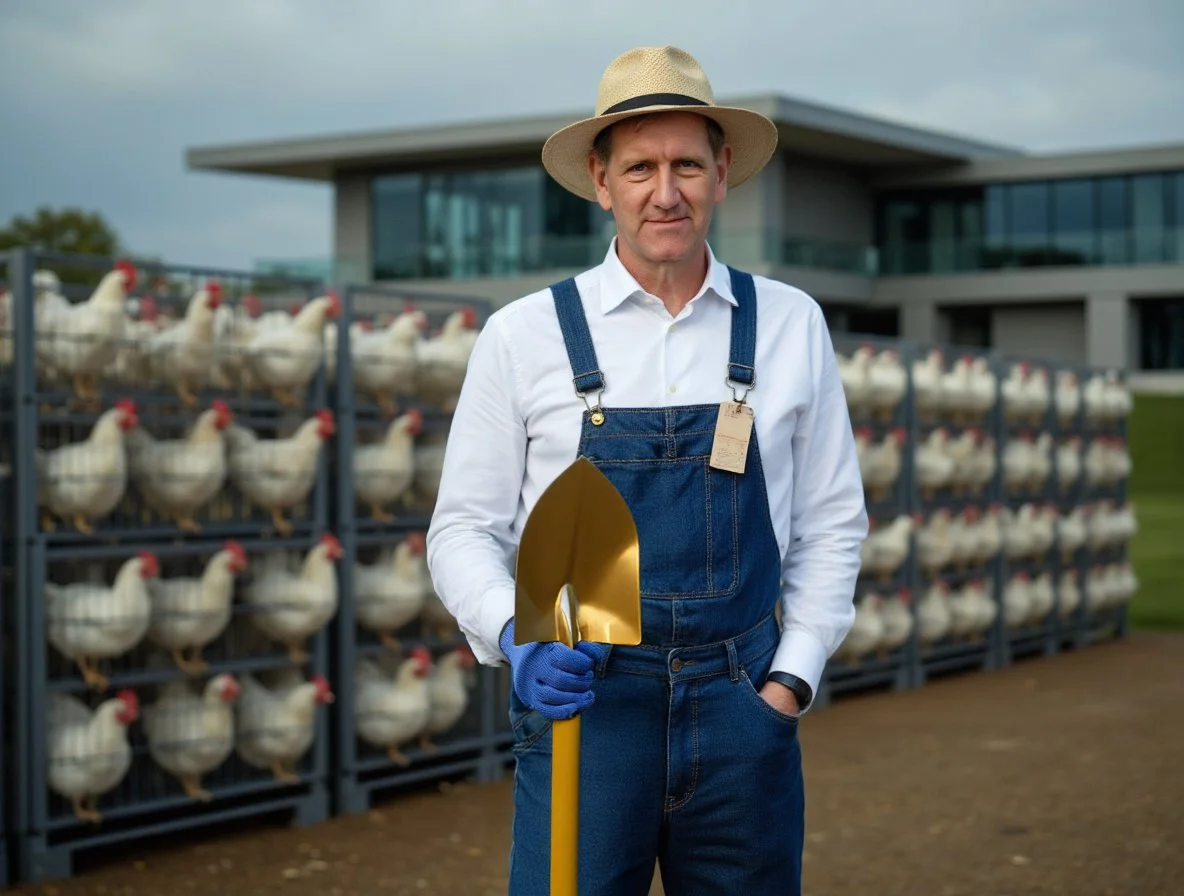
AI image intended for parody.
He built a carbon-neutral farm in Italy.
Okay. Now fix the factory farms.
Wiebe loves to talk about his eco-friendly personal farm — solar panels, zero emissions, idyllic landscapes.
But the chickens trapped in Ahold’s supply chain don’t get Tuscan sunlight. They get metal bars, ammonia burns, and broken bones.